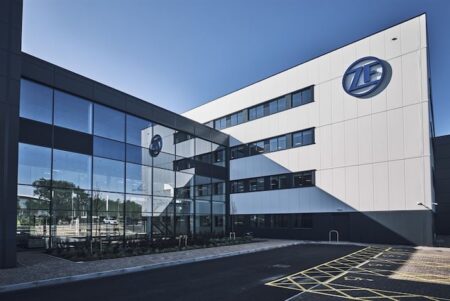


Following a technical cooperation agreement that began in 2024, Ansible Motion, a specialist in driver-in-the-loop (DIL) simulators, is expanding its partnership with the Institute for Advanced Automotive Propulsion Systems (IAAPS), a research and engineering organisation that designs, develops and tests future propulsion systems, technologies and advanced validation methods for the automotive, aerospace and marine sectors.
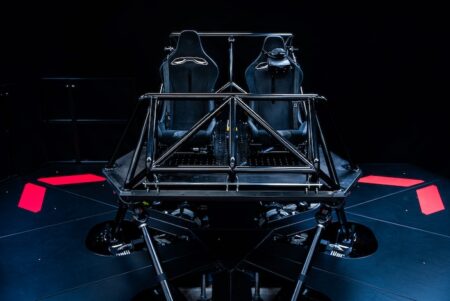
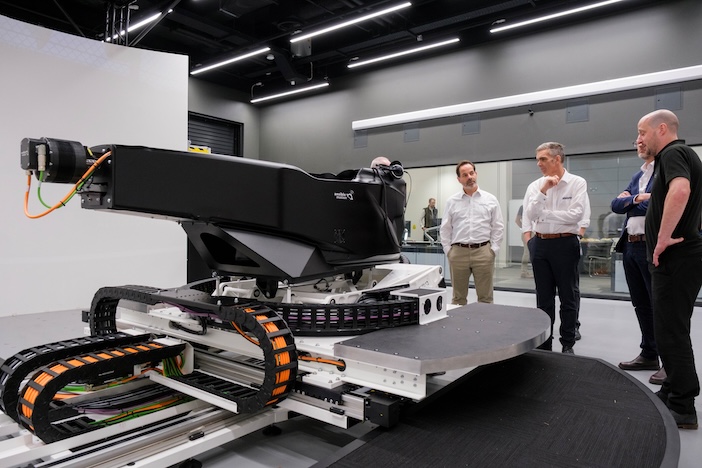
The expanded agreement specifies the installation of an Ansible Motion Delta S2 DIL simulator at the IAAPS research facility at the Bristol and Bath Science Park in the UK, to create a new vehicle-in-the-loop (VIL) development validation environment.
This second phase of the cooperation agreement, which is due to become operational from February 2026, supports the development of advanced powertrain methodologies. By directly connecting the Delta S2 DIL simulator to one of IAAPS’ existing AVL 1,800 kW four-wheel-drive powertrain dynamometers, it will create a VIL-DIL environment that bridges the virtual and physical world for the development of ICE, hybrid and electric powertrains.
IAAPS’s new laboratory will integrate the Delta S2 DIL simulator with a full powertrain dynamometer, enabling real-time interaction between human drivers and actual powertrain systems. This interaction enables engineers, researchers and drivers to experience realistic vehicle dynamics while the dynamometer controls and monitors powertrain inputs and outputs within a controlled lab environment.
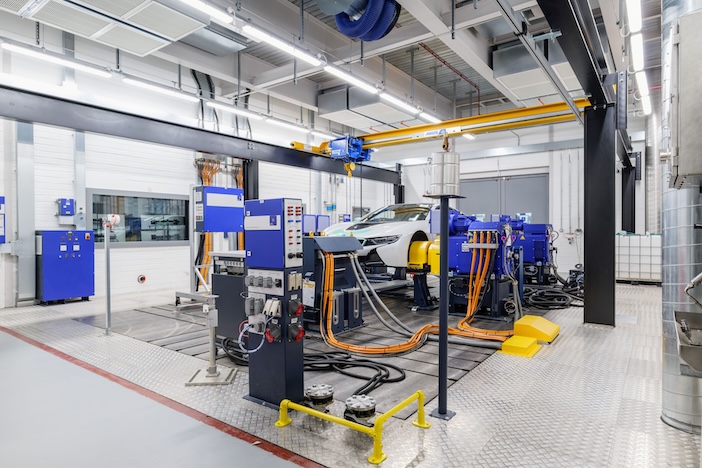
According to Ansible Motion, a key benefit of this configuration is the ability to capture human-in-the-loop behaviour during active powertrain operation, without subjecting staff or hardware to undue risk when replicating complex or hazardous driving scenarios.
This capability will speed-up driveline calibration and validation tasks across a broad spectrum of powertrain systems, including ICE, hybrid and battery-electric platforms, even ahead of full vehicle availability. The setup also enables early-stage evaluation of Advanced Driver Assistance Systems (ADAS), autonomous driving transitions, and edge-case scenarios in a repeatable manner.
Dan Clark, managing director at Ansible Motion, commented: “This next stage of collaboration provides IAAPS, its partners and the wider UK automotive industry with access to a world-class simulator environment that advances research methods for all forms of powertrain in controlled and repeatable lab conditions. The project also highlights our shared ambition to advance validation and testing techniques for increasingly complex vehicle powertrains.”
Under the new agreement with IAAPS., Ansible Motion will also be given scheduled access to the simulator lab and IAAPS’s wider research ecosystem for internal R&D purposes, customer demonstrations, and professional driver evaluations. In addition, Ansible Motion will set up a dedicated office space for four people within the IAAPS facility.
Ansible Motion and IAAPS are planning a joint launch event after the system becomes fully operational in February 2026.