
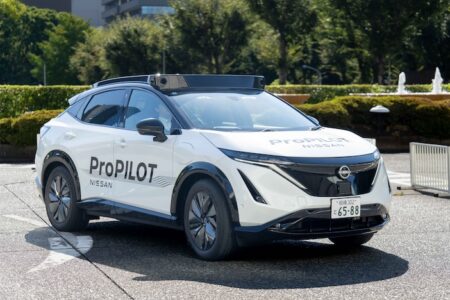
Nissan has selected Valeo as the Tier-1 system supplier for its next-generation ProPILOT programme, delivering a hardware and software platform designed to enable next-generation AI-based driving capabilities
Nissan has selected Valeo as the Tier-1 system supplier for its next-generation ProPILOT programme, delivering a hardware and software platform designed to enable next-generation AI-based driving capabilities
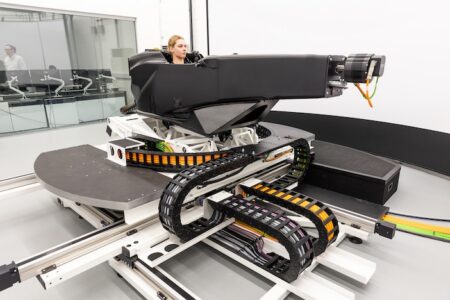
An immersive Driver-in-the-Loop (DiL) simulator is due to be installed at IAAPS in the UK, which when connected to the 1,800 kW four-wheel-drive powertrain test facility, will combine human inputs, simulated vehicle dynamics and physical propulsion hardware in real time to support faster vehicle development
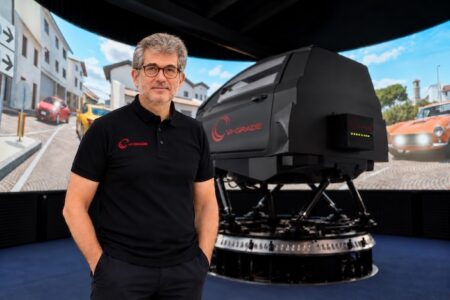
Leonardo Pascali has been appointed as the new managing director of VI-grade, with a focus on vehicle dynamics and delivering a roadmap connecting DiL, HiL, and software-defined vehicle validation
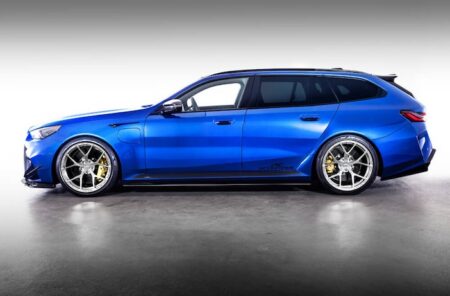
AC Schnitzer, the independent aftermarket tuning company best known for modifying BMW and MINI cars, has been saved from going out of business. The KOHL Group has acquired the AC Schnitzer brand, which will be transferred to the AM Group portfolio in November 2026

Rolls-Royce has opened the Eric Platford Testway at its Goodwood HQ, a controlled environment created for on-site final validation of completed cars where engineers can ‘excite’ cars using calibrated surface inputs to identify subtle deviations
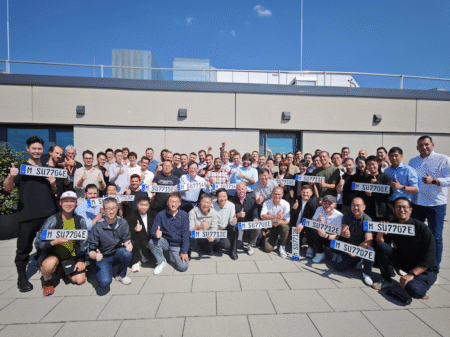
Xiaomi Auto has opened the Xiaomi Auto Europe Research and Development (R&D) and Design Center in Munich, Germany, marking the company’s first such facility beyond its domestic market. Key activities at the centre will be vehicle dynamics, intelligent driving and performance vehicle projects, as Xiaomi Auto prepares for its entry into the European market in 2027
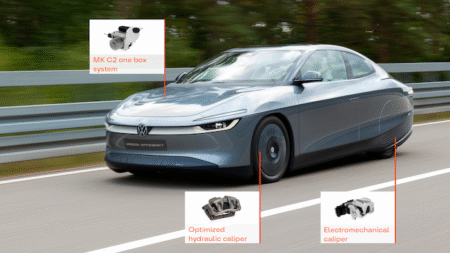
In collaboration with Volkswagen, the braking system for the Mission Efficiency concept car, based on the ID.Polo, combines hydraulic and electromechanical brake technologies to optimise regenerative braking and reduce residual braking torque
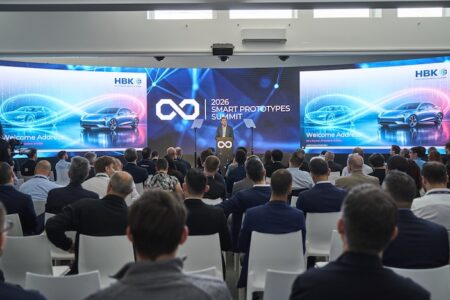
HBK and VI-grade’s Smart Prototypes Summit North America in Michigan was attended by more than 200 experts from OEMs including GM, Stellantis and Rivian. Following the success of the Summit, the event is moving on to the UK and Japan this year
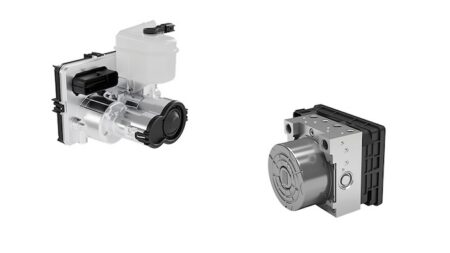
Aumovio has developed a compact distributed brake system that combines an advanced one-box electrohydraulic brake with an Electronic Stability Control (ESC) system. The first OEM order has already been placed, with production scheduled to start at the end of 2027
The latest MathWorks release adds variant management, automated embedded software testing, and visual inspection tools to MATLAB and Simulink