

Nissan and Monolith have announced a three-year extension to their partnership, which has been created for the application of artificial intelligence (AI) to improve the vehicle development process and reduce physical vehicle test requirements.
Nissan says the partnership contributes to its global recovery plan, RE:Nissan, which includes a focus on bringing products to customers more quickly by reducing vehicle development times and working with partners to drive innovation and operational efficiency.
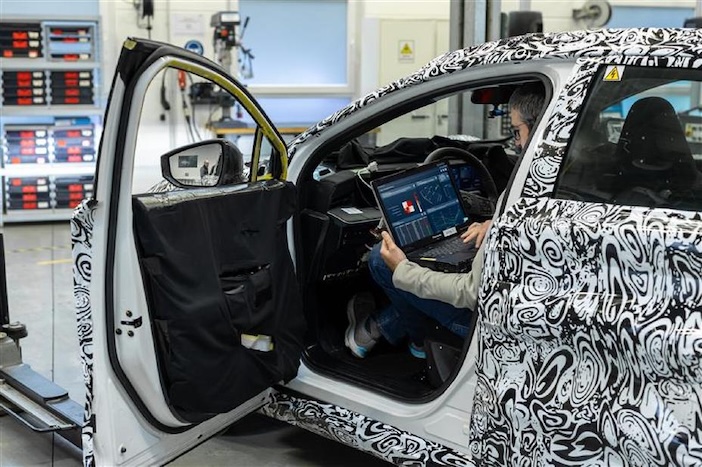
Monolith’s platform enables engineers to apply historical test data and simulations to predict outcomes, reduce reliance on physical prototypes, and improve product quality. First used to validate testing on the new Nissan LEAF electric vehicle, built in Sunderland, UK, Monolith’s AI technology will be applied to more tests for Nissan’s future range of models in Europe.
Using more than 90 years of vehicle testing data, engineers at the Nissan Technical Centre Europe, located at Cranfield, UK, will use Monolith’s AI technology to accurately predict the results of physical tests. This method is intended to reduce the reliance on physical prototypes, streamline the development process, and allow engineers to focus on hands-on problem solving and decision making.
The decision to extend the partnership follows a successful collaboration between Nissan and Monolith that used AI to test the performance of bolt joints in vehicle chassis. The AI technology recommended the optimal torque range for bolts to be tightened and prioritised additional physical tests for engineers to carry out. Nissan says the programme resulted in an overall 17% reduction in physical testing compared to the non-AI process.
The company believes that applying the same approach across the development of all Nissan’s European vehicle range could cut testing times by half.