

Renault Group and Ford have announced a strategic partnership intended to grow the availability of Ford electric vehicles (EVs) to European customers, and increase the competitiveness of both companies in the European market.
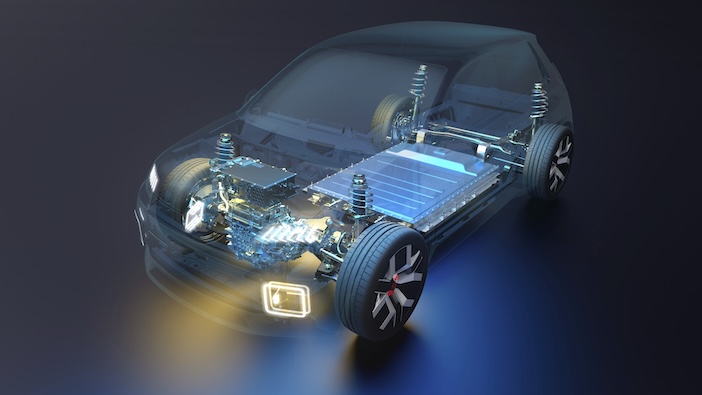
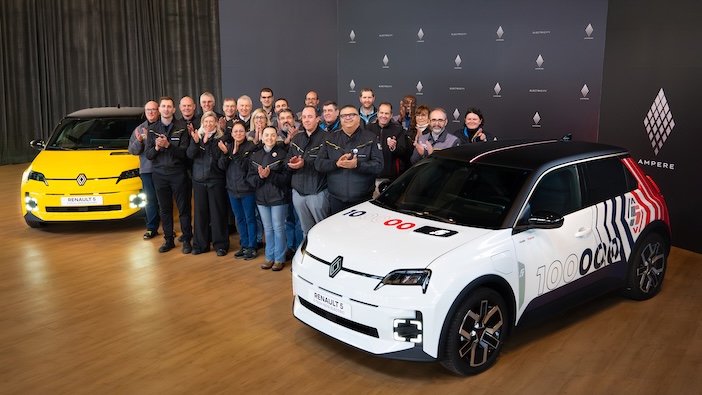
A key part of this collaboration is a partnership agreement for the development of two distinct Ford-branded EVs, both of which will be based on Renault Group’s Ampere vehicle platform, and produced by Renault Group’s ElectriCity manufacturing facility in Douai, northern France.
The two EV models will be designed by Ford, and developed with Renault Group, and while they will leverage the shared Ampere architecture for efficiency, Ford will lead the design and driving dynamics to ensure the vehicles have distinctly Ford characteristics.
“Our plan is about unleashing the Blue Oval,” said Jim Baumbick, president of Ford Europe. “We are leveraging strategic partnerships to ensure competitiveness, but we are obsessing over the product. These will be fun-to-drive, fully connected vehicles that stand out from the crowd.”
Ford is looking to building a sustainably profitable business in Europe, which it views as “an aggressive market”, with the Renault deal driving a new product offensive through the introduction of new multi-energy affordable cars. The planned new vehicles will enhance Ford’s existing product range and are expected to arrive in showrooms in 2028.
In addition to the agreement to co-develop EVs, Renault Group and Ford have also signed a Letter of Intent (LOI) to collaborate on a new light commercial vehicle for the European market. Under the terms of this LOI, Ford and Renault will explore the opportunity to jointly develop and manufacture Renault and Ford branded light commercial vehicles (LCVs).
By combining their expertise in innovation, design, software, and service delivery, Renault Group and Ford are aiming to address industry challenges and better serve customers in the retail and commercial vehicle segments in Europe. The announcement with Renault Group builds on Ford’s history of successful partnerships in Europe with Koç Holding and Volkswagen.
Jim Farley, president and CEO of Ford Motor Company said of the agreement: “The strategic partnership with Renault Group marks an important step for Ford and supports our strategy to build a highly efficient and fit-for-the future business in Europe. We will combine Renault Group’s industrial scale and EV assets with Ford’s iconic design and driving dynamics to create vehicles that are fun, capable, and distinctly Ford in spirit.”
François Provost, CEO of Renault Group added: “In the long term, combining our strengths with Ford will make us more innovative and more responsive in a fast-changing European automotive market.”
Ford calls for policy alignment
Ford’s strategy for Europe is designed to help the company navigate Europe’s evolving CO2 emission regulations, with more options for affordable, multi-energy vehicles during the transition to electrification. Ford says the current share of electric vehicles in Europe is steady at 16.1%, far below the required 25% of new vehicle registrations required to meet Europe’s strict CO2 targets by 2025.
“We need to enable everyone to benefit from electrification and letting customers choose – whether that’s fully electric or hybrid vehicles,” said Jim Baumbick, president of Ford Europe. “It is about making the transition more attractive and more affordable for all consumers and businesses, stimulating demand rather than stifling it.”
Ford proposes three steps to ensure a successful transition to electrification:
- Align targets with reality. CO2 targets must be aligned with actual market adoption and provide automakers with a realistic and reliable 10-year planning horizon. This includes giving consumers the option to drive hybrid vehicles for longer, bridging the gap rather than forcing a leap they aren’t ready to take.
- Incentivise the transition. European auto manufacturers have invested hundreds of billions in EVs. Governments must match that commitment with consistent purchase incentives and a charging infrastructure that extends beyond wealthy urban centres into the rural heartland.
- Support the working economy. The current approach to commercial vehicles is an economic tax on the backbone of Europe, says Ford. Only 8% of new vans are electric. These vehicles are tools for plumbers, florists, builders, and countless other trades. Aggressive CO2 targets on commercial vehicles unfairly penalise the small and medium-sized businesses that generate more than 50% of Europe’s GDP, says Ford.