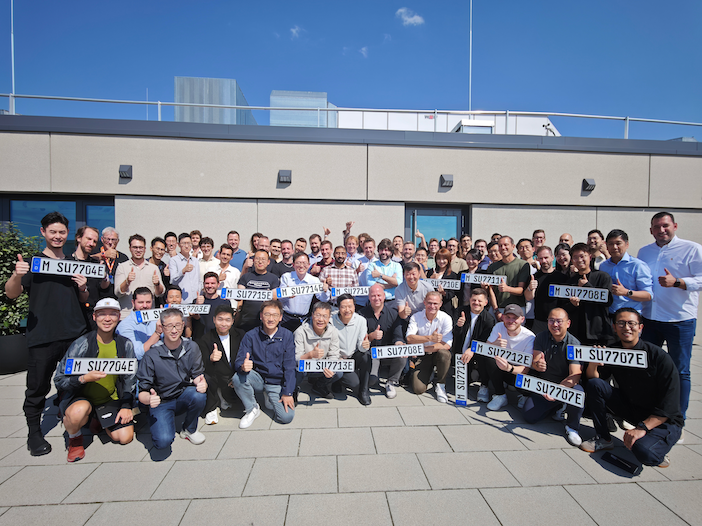
Xiaomi Auto, the Chinese electric vehicle manufacturer headquartered in Beijing, has opened the Xiaomi Auto Europe Research and Development (R&D) and Design Center in Munich, Germany, marking the company’s first such facility beyond its domestic market.
The centre will focus on performance vehicle projects, electric vehicle technology development, design innovation, customer orientation and advanced research as Xiaomi Auto prepares for its entry to the European market in 2027.
The opening of the facility marks a key moment in Xiaomi Auto’s global strategy, designed to accelerate advancements in smart mobility and automotive innovation. Following the launches of the Xiaomi SU7, Xiaomi SU7 Ultra, and Xiaomi YU7 vehicle models in mainland China, this expansion is intended to progress the company’s long-term ‘Human x Car x Home’ smart ecosystem strategy, which ties in its automotive activities with the parent company’s work in consumer electronics and software.
Driving innovation from Munich
The establishment of the Munich R&D and Design Center is an important part of Xiaomi Auto’s goal of building a global innovation network. By leveraging world-class competences and ecosystem, Xiaomi Auto is seeking to accelerate breakthroughs in intelligent driving and vehicle dynamics.
This expansion of the company’s R&D network into Europe is intended to help it develop vehicles with good dynamic performance that align with global standards of safety and quality.
Investing in talent and collaboration
The Munich centre will bring together engineers, designers, and researchers, who will collaborate with Xiaomi Auto’s other teams around the world. The company says it is committed to investing in international talent development and embracing an open, forward-looking environment that encourages breakthroughs in vehicle performance, autonomous driving, EV platforms, and next-generation user experiences.
The centre will also seek to foster collaborations with research institutions while forging meaningful partnerships across industries to accelerate smart mobility solutions and ecosystem integration while addressing infrastructure and ethical AI considerations.