The International Organization for Standardization (ISO) has published a framework for qualifying the virtual test environments used to validate automated driving systems, giving developers, test organisations and regulators a common method for demonstrating that simulation results can be trusted as safety evidence.
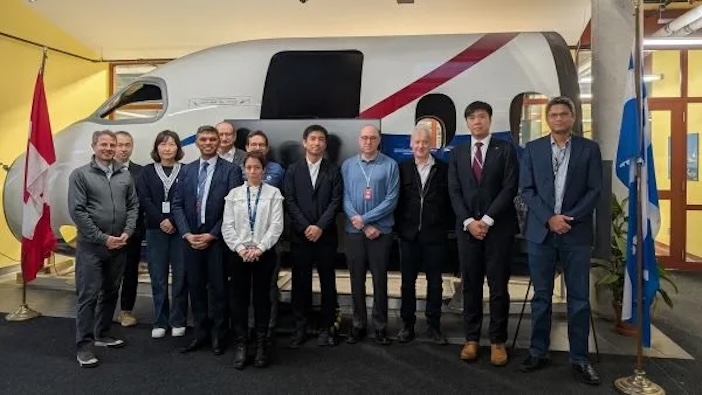
The ISO Publicly Available Specification (PAS), designated ISO/PAS 34506:2026, ‘Road vehicles – Test scenarios for automated driving systems – Qualification of virtual test environments’, was co-led by Professor Siddartha Khastgir, head of safe autonomy at Warwick Manufacturing Group (WMG), University of Warwick, and Benoit Anctil of Transport Canada. An international group of experts supported its development, and the underlying research that provided its evidence base was funded by Transport Canada.
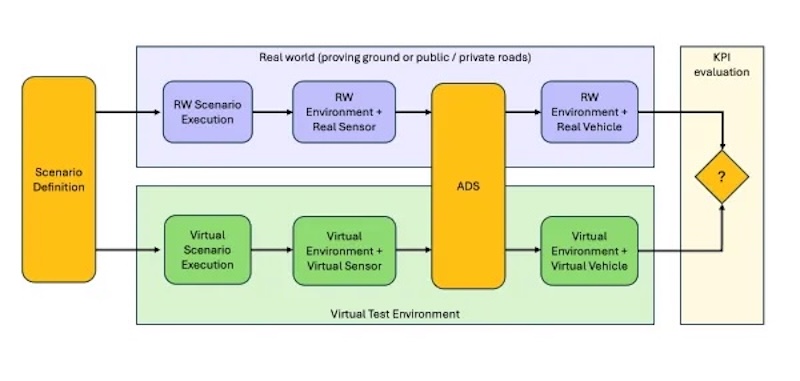
According to WMG, it is the first international standard to set out a qualification scheme for virtual test environments (VTEs) for automated vehicles. Simulation now carries a large share of automated vehicle testing, because testing every possible driving scenario on public roads is impractical and, in some cases, unsafe.
Until now, however, there has been no internationally agreed method for judging whether a VTE itself is trustworthy. ISO/PAS 34506 provides a framework for assessing and validating virtual testing, with qualification covering three levels: the performance of the simulation environment, the process used to develop it and the way in which it is used.
The specification is intended to support the recently adopted global regulatory framework for automated driving systems, comprising United Nations (UN) Regulation No. 185 (UN R185) and Global Technical Regulation No. 26 (GTR 26). These regulations require manufacturers to provide safety evidence based on a combination of virtual, track and real-world testing, and to demonstrate that the test environments are credible and fit for purpose.
ISO/PAS 34506 gives manufacturers, technical services and approval authorities a common, internationally agreed method for qualifying those VTEs. According to WMG, it can support the evidence submitted for UN R185 type approval without replacing the regulation’s own requirements.
Professor Khastgir said, “By increasing confidence in simulation-based testing, the standard has the potential to make safety validation more efficient and support the safe deployment of automated vehicles.”
Daniel Quirke, global autonomous vehicle policy lead at UK-based automated driving developer Wayve, which contributed to the specification, said, “Simulation is at the core of any credible safety case for autonomous driving technology. Having one internationally recognised standard is essential for building trust and confidence in the evidence that virtual testing provides, and we look forward to seeing it develop further to cover the latest advances in simulation methods.”
While ISO/PAS 34506 focuses on automated driving, it is designed to be transport-sector agnostic, according to WMG. Its principles could therefore be applied to the validation of autonomous systems in the maritime and aviation sectors.