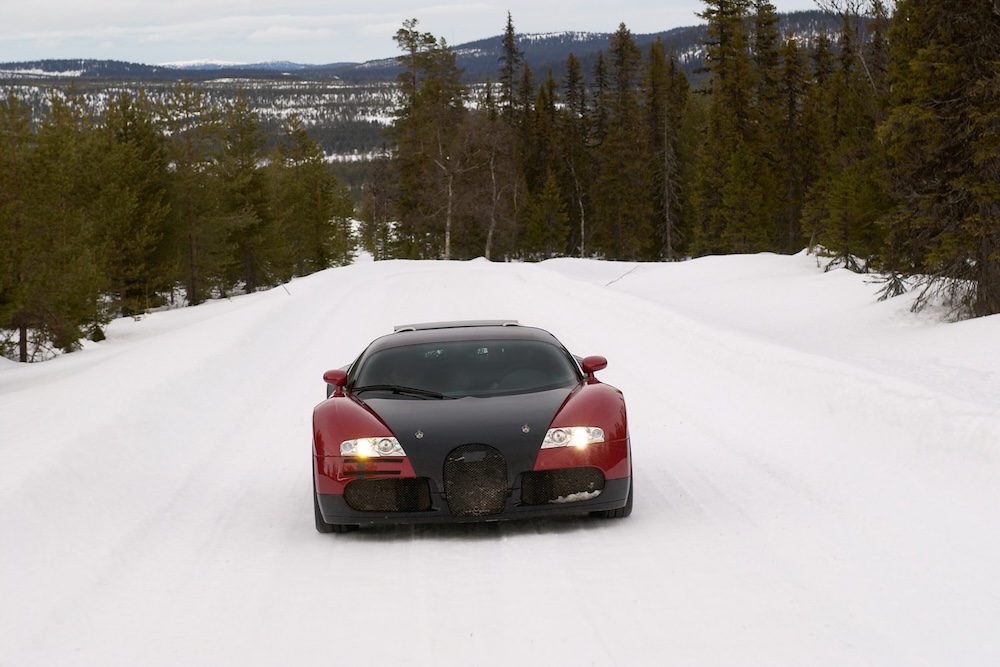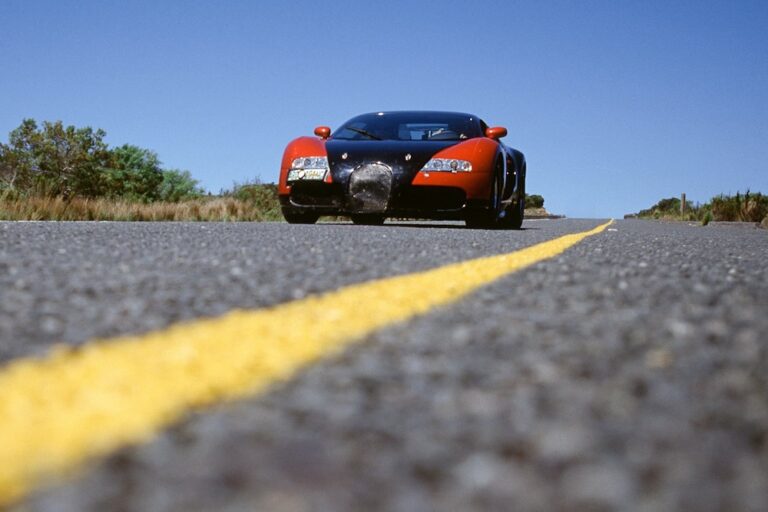
When the Bugatti Veyron was launched in 2005 it represented an entirely new automotive segment – the hypercar, a new breed of vehicle that redefined what was thought possible in car performance. For Loris Bicocchi, Bugatti’s high-speed driving expert at the time, testing the Veyron represented a deeply personal journey.
Bicocchi had collaborated with the Bugatti marque as part of the testing programme for the EB110 GT and EB110 SS from 1990 through to 1995, so he was well accustomed to the remarkable heights of performance that four-wheel-drive Bugatti supercars could reach.
However, his encounter with the Veyron represented something entirely new – a machine that could not be measured against anything that came before it.
When he received a call in 2001 asking if he was available to work on a new Bugatti project, he did not know what awaited him. Unofficially, however, the automotive world was already effervescent with excitement. His debut run in a Veyron prototype took place at the Michelin test track in Ladoux, Clermont-Ferrand, behind the wheel of a red and black car.
Anticipation quickly turned into emotion. “I was so excited that I couldn’t even wait for the official tests on Monday morning,” Bicocchi remembers. “I went on Sunday when the car was delivered and sat in the car. When the engineers arrived the next day, I was laser-focused on relaying my first impressions. Simply put, we were all amazed by what the car was already showing.”
“All car enthusiasts had heard rumours about the Veyron. 1,001 horsepower, more than 400 kilometers per hour, sixteen cylinders – sixteen. Can you imagine? Even today, when I say that, I still get goosebumps,” he adds.
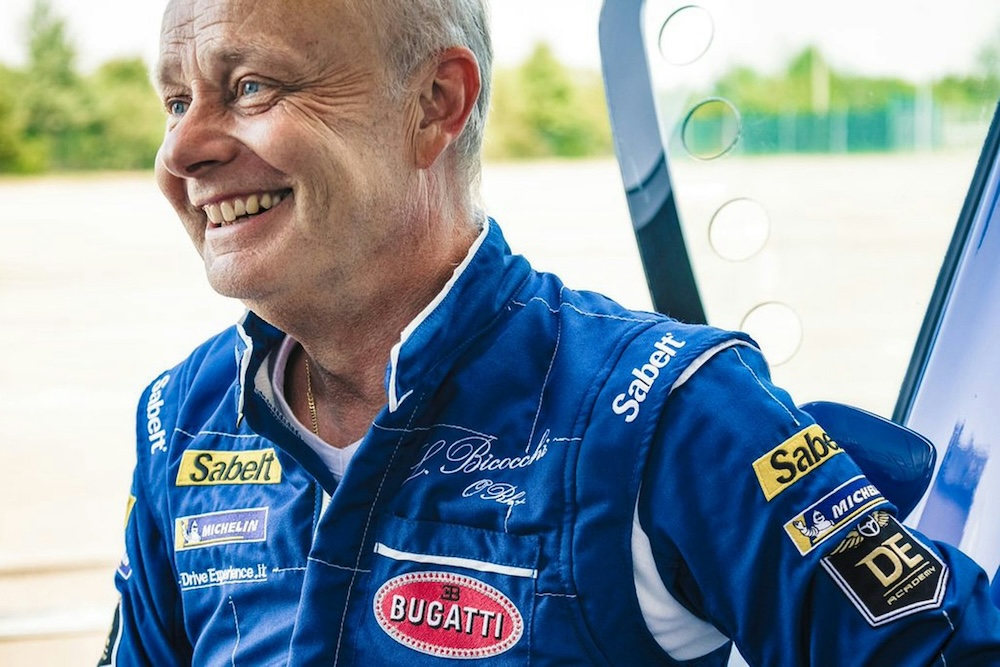
At that moment in time, the Veyron delivered twice the power of any other production car. Even for a driver with experience across the most advanced supercars, there was no reference point. “I didn’t know what to expect,” Bicocchi recalls. “I didn’t dare to go full throttle. It was so impressive – crazy, almost inexplicable. You immediately understood what this car stood for.”
Testing the Veyron meant entering into unknown territory. With speeds exceeding 400 km/h (248 mph), the rules governing aerodynamics, stability and braking changed entirely.
“From 300 or 320 kilometres per hour onwards, everything changes. Especially aerodynamics. Every single detail counts. I had to reset all the references I had built during my career, because the Veyron was simply incomparable to anything I had driven before,” says Bicocchi.
Beyond the technical challenge lay another defining ambition, as the Veyron was conceived as a hypercar that could be driven by recreational drivers, safely and confidently, under any conditions.
“This was a huge responsibility, both for me and the marque,” Bicocchi reflects. “We had to create an incredible car, yes, but one that could be driven by anyone, not only by professional drivers. It was real teamwork – a 360-degree strike force of experts – and we all learned together as we set about making history. That was incredible.”

For Bicocchi, the emotional weight of the project was inseparable from Bugatti’s history. The Veyron represented the rebirth of a marque unlike any other; during long periods of travel between test locations around the world, he immersed himself again in the story of Ettore Bugatti – taking the time to nurture a deep understanding of the brand, Ettore’s vision in 1909, and what makes its legacy so rich.
One moment in particular is etched in his memory – undertaking high-speed testing at VW’s Ehra-Lessien test track in Germany. “I remember being asked to fully accelerate and then apply full braking at more than 400 kilometres per hour,” Bicocchi recalls. “It was incredibly stressful and exciting at the same time. When you achieve your goal and the whole team comes to you, you really feel that you are part of a family – and part of history.”
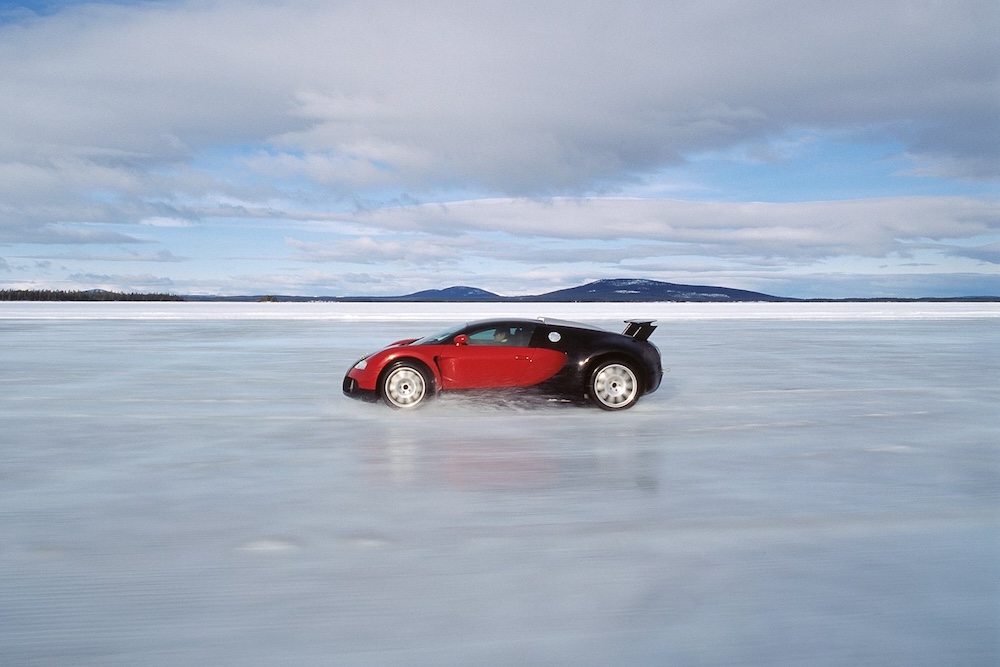
Today, more than 20 years later, the emotion has not faded. The thrill of taking part in a milestone in automotive history stayed with Bicocchi and the whole team behind the Veyron. For Bicocchi, the Veyron’s enduring relevance lies in a defining Bugatti quality: timelessness.
“A Bugatti car is and should remain timeless,” he concludes. “When you look at the design, the lines and the emotion they create, you realise they are not linked to a single era. That is what makes Bugatti so special.”
As Bugatti continues to shape the future of the hypercar, the Veyron stands as a singular achievement – a moment when the impossible became reality, and a car that remains incomparable; both for its performance, and for the profound emotion it continues to provoke all over the world.