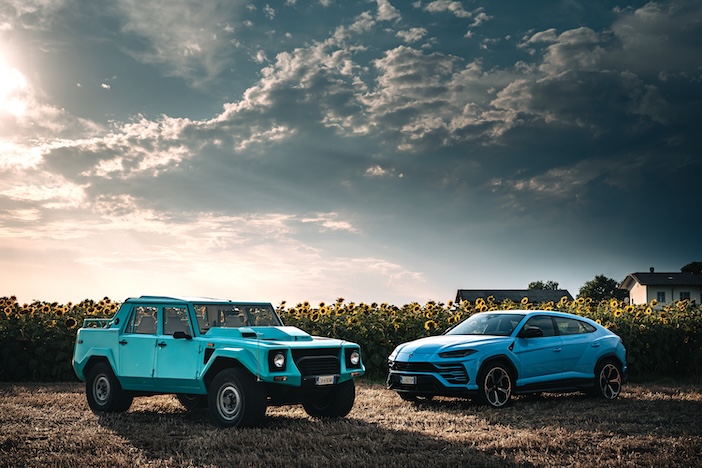
The Urus SUV has been the best-selling model in the history of Lamborghini, with more than 35,000 units sold globally since its launch in early 2018. While the brand is best known for its sports cars and supercars, Lamborghini has been dabbling in the SUV segment for almost 50 years, with some interesting models produced along the way.
The story starts with the Cheetah, a prototype off-road vehicle originally conceived for military applications, which was revealed at the 1977 Geneva Motor Show.
Created in collaboration with the American company MTI, the prototype featured a rear-mounted Chrysler V8 engine, a tubular steel chassis and an open fibreglass body. Lamborghini was ultimately unsuccessful in securing the government contract for which the Cheetah had been conceived, and hit some legal difficulties.
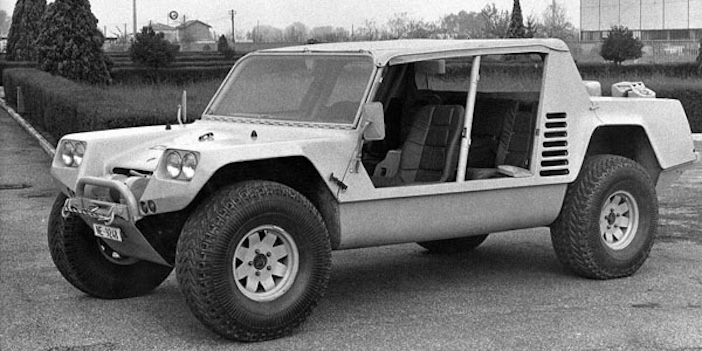
However, Giulio Alfieri, technical director of Automobili Lamborghini, who was well-known for his work in Maserati’s motorsport programmes, and had redesigned the Countach and the all-new Jalpa, saw potential for the Cheetah.
The project evolved into the LM001, again with a rear-engine layout, but testing in desert conditions showed limitations related to weight distribution, prompting engineer Giulio Alfieri to fundamentally rethink the vehicle’s architecture.
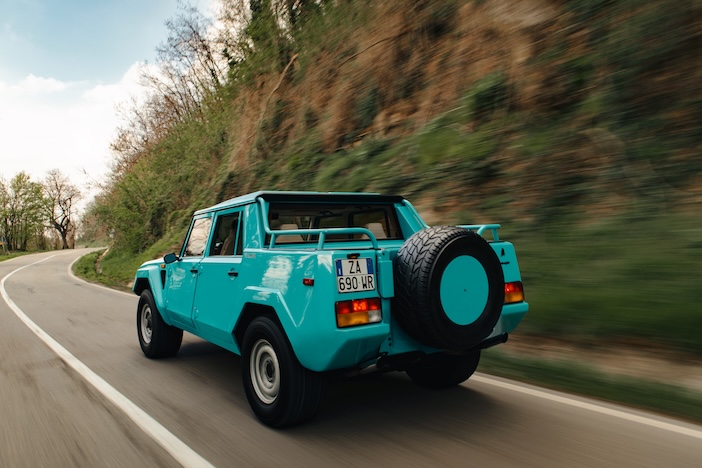
He created a new chassis with the engine relocated to the front, with that engine being the 5.2-litre, 450 CV V12 from the Countach Quattrovalvole. The LMA (Lamborghini Militaria Anteriore) prototype also had a five-speed ZF manual gearbox and the option to disengage front-wheel drive.
This development phase also saw ideas trialled including the experimental LM003, powered by a VM turbodiesel engine, and the LM004, equipped with a 7.0-litre marine-derived V12.
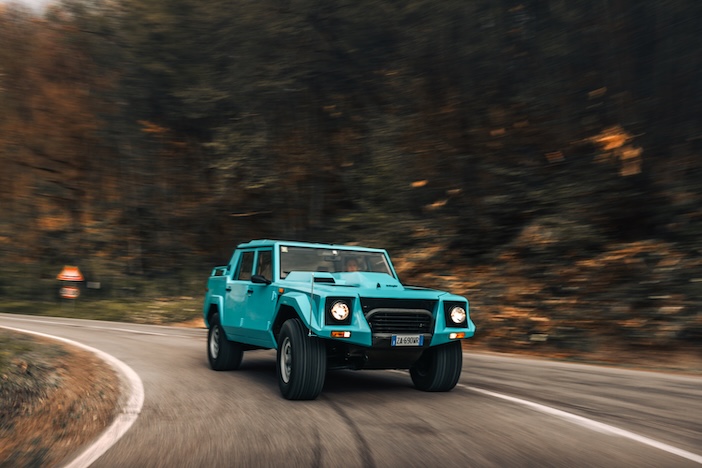
However, that LM002, with the heart of a Countach, was chosen, and perhaps the first ‘super SUV’ was born. The 2.7-ton LM002 was as capable of exceeding 200 km/h as it was traversing sand dunes, thanks to its specially developed Pirelli Scorpion BK tyres.
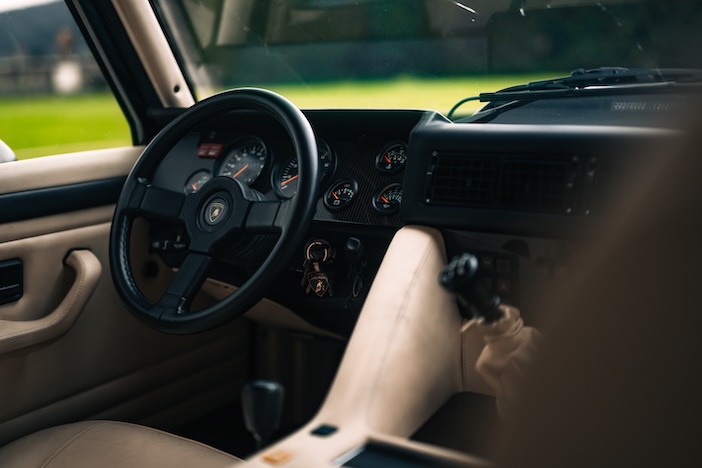
The interior became a little more civilian, and a little more civilised, with a few luxuries including leather upholstery, wood trim, and air conditioning.
The LM002 was launched at the Brussels Auto Show in 1986, the year before Alfieri retired, and production continued until 1992. A total of 301 units of the LM002 were built (including the LM/American version introduced in 1989 for the US market), which became affectionately known as the ‘Rambo Lambo’.
A gap in the super SUV history
The 1990s and 2000s passed with many exciting Lamborghinis such as the Diablo, Murcielago, Gallardo and Aventador, but there was a 25-year gap before another super SUV appeared.
First unveiled as a V10-powered concept in 2012 at the Beijing Auto Show and launched into production in 2017, the Urus ushered in a new era for the Lamborghini brand in a market that now had high demand for performance SUVs. The production version had a twin-turbo V8 – Lamborghini’s first such engine configuration – which produced 650 CV and 850 Nm of torque.
This translated into a 0 to 100 km/h time of 3.6 seconds and a top speed of 305 km/h. It could stop quickly too, with its carbon-ceramic braking system featuring 440 mm front discs: the largest fitted to a production vehicle at the time of launch.
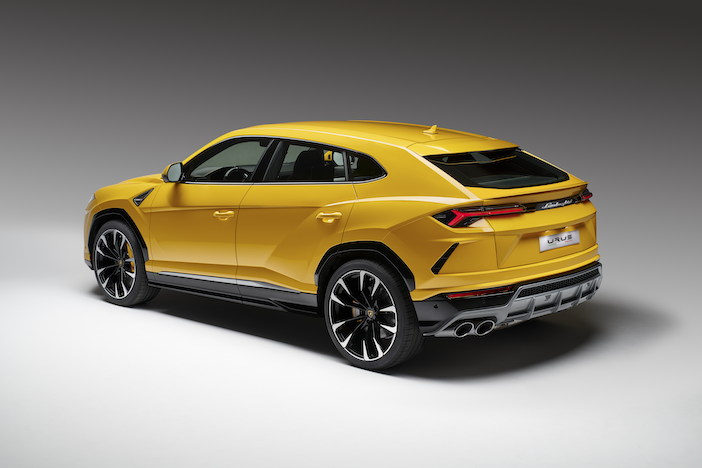
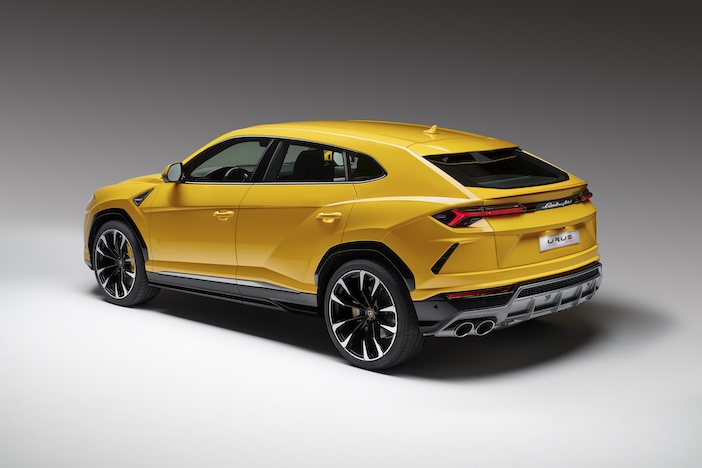
The name Urus derives from the Latin term urus, referring to the aurochs, the ancient ancestor of modern cattle, giving it that traditional subtle Lamborghini bull reference.
The Urus has a solid foundation, being based on the Volkswagen Group MLB Evo platform, which underpins SUV models such as the Audi Q7, Bentley Bentayga, Porsche Cayenne, and Volkswagen Touareg.
Lamborghini strived to give the Urus distinctive driving dynamics, with technologies such as rear-wheel steering, active anti-roll bars, and the Tamburo driving dynamics selector giving a sporty feel in a family-friendly package, and attracting a new generation of customers. So much so that Lamborghini had to expand its production facility in Sant’Agata Bolognese from 80,000 to 160,000 square metres to keep up with demand.
Urus Performante
Over time, the Urus family has evolved through different interpretations of the ‘super SUV’ concept. The Performante model introduced in 2022 adopts a suspension setup focused on maximum dynamic precision, replacing the adaptive air suspension with dedicated steel springs. This setup is designed to enable more direct response and optimised body control, further reducing body roll in the highly dynamic driving conditions.
The power of the twin-turbo V8 is increased to 666 CV and 850 Nm of torque, which combined with extensive use of carbon fibre and weight optimisation, takes acceleration from 0 to 100 km/h down to 3.3 seconds, and top speed up to 306 km/h.
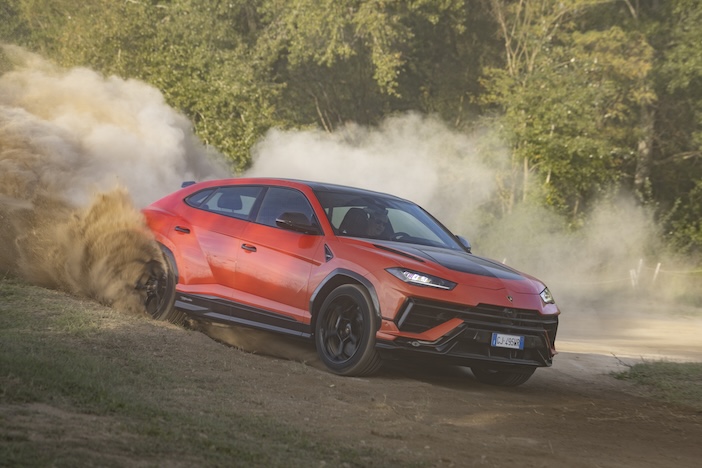
The carbon fibre accoutrements include an engine bonnet and a rear spoiler inspired by the aerodynamics of the Aventador SVJ, designed to increase rear downforce. Other special features incude the Akrapovič titanium exhaust system and specially developed Pirelli P Zero Trofeo R tyres.
The performance of the Urus Performante was put to the test at the 2022 Pikes Peak International Hill Climb, where it set a new speed record for production SUVs, at 10:32.064.
Urus S
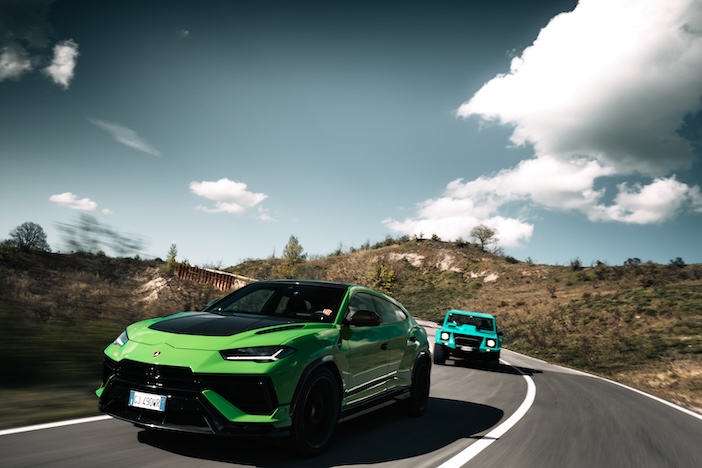
The Urus S was introduced in 2022 as a version with a little more everyday usability and comfort, while still sharing the same 666 CV twin-turbo V8 engine as the Performante.
The Urus S has an adaptive air suspension system, specifically tuned for a balance between comfort, driving dynamics, and versatility in all operating conditions. Including while accelerating from 0–100 km/h in 3.5 seconds and hitting a top speed of 305 km/h.
Urus SE
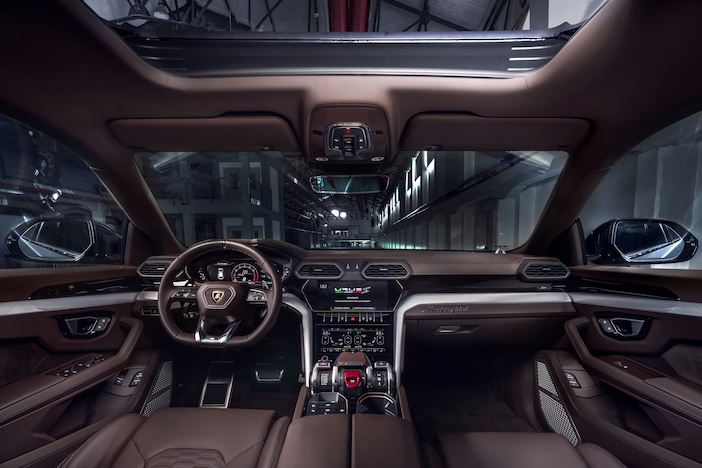
The latest version is the Urus SE, unveiled at the 2024 Auto China Beijing. The SE is the first plug-in hybrid Lamborghini SUV, and the second model introduced as part of the company’s Direzione Cor Tauri strategy, which is a roadmap towards electrification and decarbonisation.
The powertrain combines a twin-turbo V8 engine with a 141 kW electric motor, to create 800 CV and 950 Nm of torque. The Urus SE is the most powerful Urus ever produced, with a top speed of 312 km/h and a 0–100 km/h time of 3.4 seconds. Its 25.9 kWh battery can also propel the SUV in fully electric mode for over 60 km.
Technical details of the SE introduce an electronic centre torque splitter, an electronically controlled rear limited-slip differential (LSD), and Pirelli P Zero tyres with Elect technology developed specifically for hybrid models.
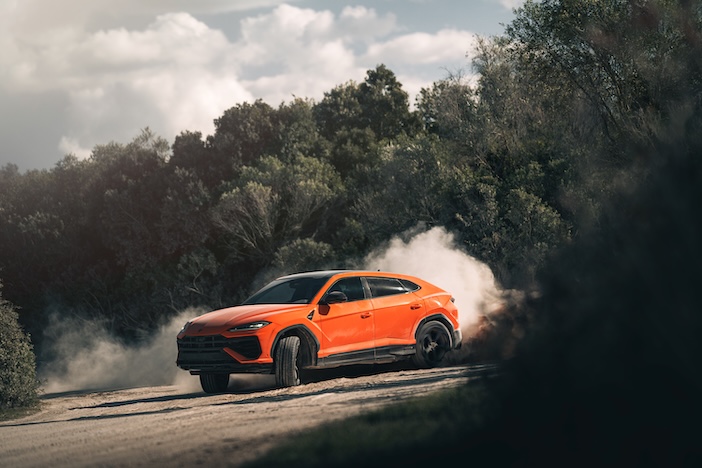
The aerodynamics have been redesigned to improve cooling of the powertrain and braking system, with a new floating bonnet inspired by that of the Revuelto, while the rear features a new diffuser designed to increase downforce at high speeds.
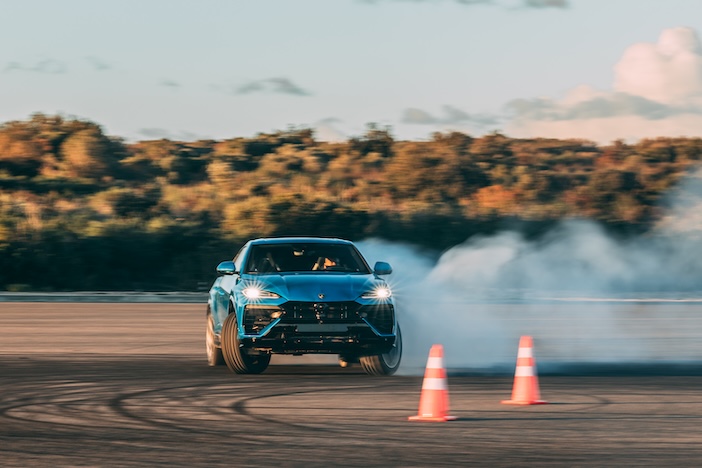
This super SUV can even help save lives, as Lamborghini has developed a special version for the Italian State Police that is equipped for urgent organ and plasma transport, and other medical missions. Dedicated features include a portable refrigeration system, a defibrillator, and emergency equipment, which can quickly be where they need to be thanks to the 666 CV twin-turbo V8.