


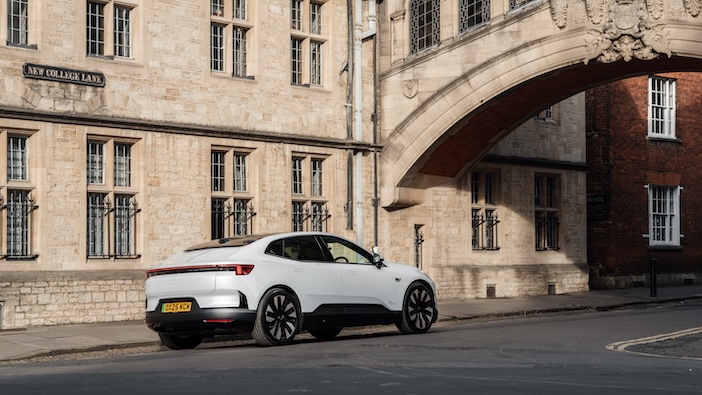
Polestar and the SDG Impact Lab at the UK’s University of Oxford have launched a pilot research study to investigate whether the sensations associated with driving excitement can be observed, analysed, and quantified through measurable signals in the brain and body.
The study aims to develop a measurable definition of driving pleasure as some traditional performance benchmarks, such as engine noise, become less relevant in line with electric vehicles becoming more popular. Six doctoral researchers from the University of Oxford have been recruited to conduct the work as a multidisciplinary team spanning engineering science and experimental psychology.
Participants in the study will drive a high-performance Polestar car while researchers analyse their brain activity alongside biometric and behavioural data. The study will examine whether driving excitement, previously associated with characteristics such as a V8 roar, can be replicated or redefined in electric vehicles.
Christian Samson, head of product attributes at Polestar, said the company is seeking to challenge conventions around straight-line acceleration being the default measure of driving excitement. “The scientific approach of this research promises real-world benefits for our customers, as the data can be used by our engineering team as an added layer for fine tuning our cars’ vehicle dynamics and performance attributes,” he said.
The study runs from 9 March to 31 July 2026 and includes vehicle testing at Sweden’s GotlandRing test track in June. The results are of the study are planned to be presented in autumn 2026 at an event at the University of Oxford.